
How I find passive IT jobs with just a personal website
Introduction
Job applications often go unread. Recruiters may never open your CV, automated filters can reject it before a person sees it, and some postings are not real. Every new search starts from zero.
I take a different approach. Instead of sending applications, I build an online profile that people can find on their own. Over time, recruiters and clients contact me. This article covers what I do, what I keep doing, and how I get paid by clients in other countries.
This is an updated version of my earlier article, How I find IT jobs and projects without a CV. The core idea is the same. The practices and examples below are what I do now.
Why passively?
Hiring is a two-way relationship. Workers need jobs, and companies need people. Applying is the active side. You send a CV, wait, and repeat the process for every search.
The passive side works differently. You build a profile over months. The profile answers questions for people who are already searching: what you work on, how you think, and whether you have shipped anything real. When someone needs help, they find you.
What I do consistently
- Run a personal website and blog on your own top-level domain. The site works as an online CV, and the articles show real work. Avoid free subdomains from hosting platforms, because they look less established.
- Set up payments that work across borders. See the Wise and Payoneer section below.
- Publish code on GitHub, even small tools. A database backup script can start a conversation you did not expect. One of the messages below came from exactly that kind of project.
- Share articles on LinkedIn and other platforms. Many recruiters search there.
- Answer technical questions on Reddit, LinkedIn, and community groups. Make the answer useful first, and link to your site only when the link adds something.
- Ask clients for a small credit after a project, such as "Developed by Harry Tang" with a link to your site.
- Join technical groups and forums, and stay active. Do not spam links. That is the fastest way to get banned.
- Ask friends to refer you when they hear about a role or project.
- Check freelance platforms such as Freelancer for project work. It is one channel among several, not the whole strategy.
Get paid globally: Wise and Payoneer
Clients in other countries pay in different currencies, and bank transfers can be slow and expensive. I use two services:
These are my referral links. If you sign up through them, I may receive a bonus.
I won't repeat the Wise setup here. My article on receiving a salary through Wise covers it.
My results
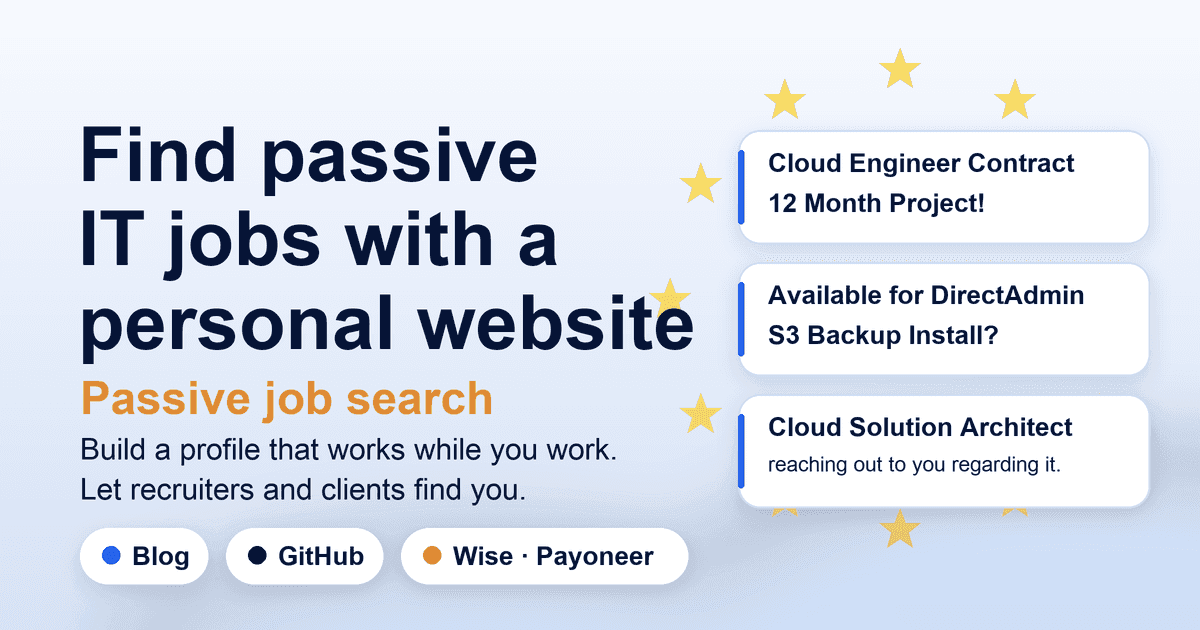
The screenshot below shows the messages I received through this approach. They include:
- A recruiter who reached out about a team that needs developers for cloud products.
- A message offering a 12-month cloud engineer contract.
- A recruiter asking about a Cloud Solution Architect role.
- A publisher who found my GitHub project for DirectAdmin backups to S3 and asked whether I was available for an install.

The screenshot shows inbound messages, not outcomes. It does not show which messages turned into jobs or projects.
Conclusion
The passive approach takes time, and results vary. Start with the parts you control: a domain, a few published articles, one public repository, and a payment setup that works across borders. Then keep showing up in the same places.
If you have tried a similar approach, leave a comment with what worked for you.
If you found this useful, you can buy me a coffee! Thanks for the support!